
January 2026 Newsletter
What's Included in This Month's Newsletter
President’s Message: Embracing Collaboration and Watching It Take Root
As we begin a new year, one thing is abundantly clear: the horticultural therapy profession is growing—in numbers, in reach, and in collective energy. Membership is expanding, engagement is deepening, and truly impactful professional connections are forming across healthcare, human services, education, environmental stewardship, and allied professional fields. This month, AHTA is focusing on collaboration across disciplines, generations, perspectives, and geographic regions—embracing both national and global connections.
As AHTA members know, horticultural therapy is inherently interdisciplinary, bringing together horticulture, human science, psychology, and environmental connection. Our Board of Directors, member base, and executive leadership are actively building meaningful collaborations that reflect this integrative foundation and strengthen how we practice, lead, and serve.
This collaborative spirit is energizing. It is strengthening the foundation of our profession—inspiring the reach of horticultural therapy and therapeutic horticulture across communities.
The AHTA 2026 Annual Conference ‘Call for Sessions’ is now open, continuing our long-standing tradition of interdisciplinary exchange and high standards in conference programming. At the same time, the ‘Growing Impact’ Youth Wellness Campaign is bridging allied professions with AHTA leadership and member-led initiatives—building shared alignment and momentum around youth well-being through horticulture and therapeutic approaches, nationwide and globally.
We are especially excited to welcome Jennifer Jewell, author of The Earth in Her Hands and creator/host of Cultivating Place, as our keynote speaker for the AHTA 2026 Annual Conference. Her voice and storytelling reflect the people–plant connection and collaborative spirit at the heart of our professional field. This year’s in-person conference will be a signature experience —within inspiring, plant-rich environments unique to San Francisco, experiential learning settings, and expert-led forums.
As we center on collaboration this month, we invite you to take part in the work unfolding across AHTA. Submit a presentation proposal for the 2026 Annual Conference, be an exhibitor at the Conference, align your efforts with the ‘Growing Impact’ Youth Wellness Campaign with events resuming in March 2026, or lend your time and expertise to support the successful launch of board certification. When we collaborate and move forward together, our combined strength exponentially amplifies.
“One light feeds another. One strong family lends strength to more. One engaged community can ignite those around it. This is the power of the light we carry.”
-Michelle Obama
With Gratitude,
Kelly Warnick, HTR, JD
President, American Horticultural Therapy Association
News and Events
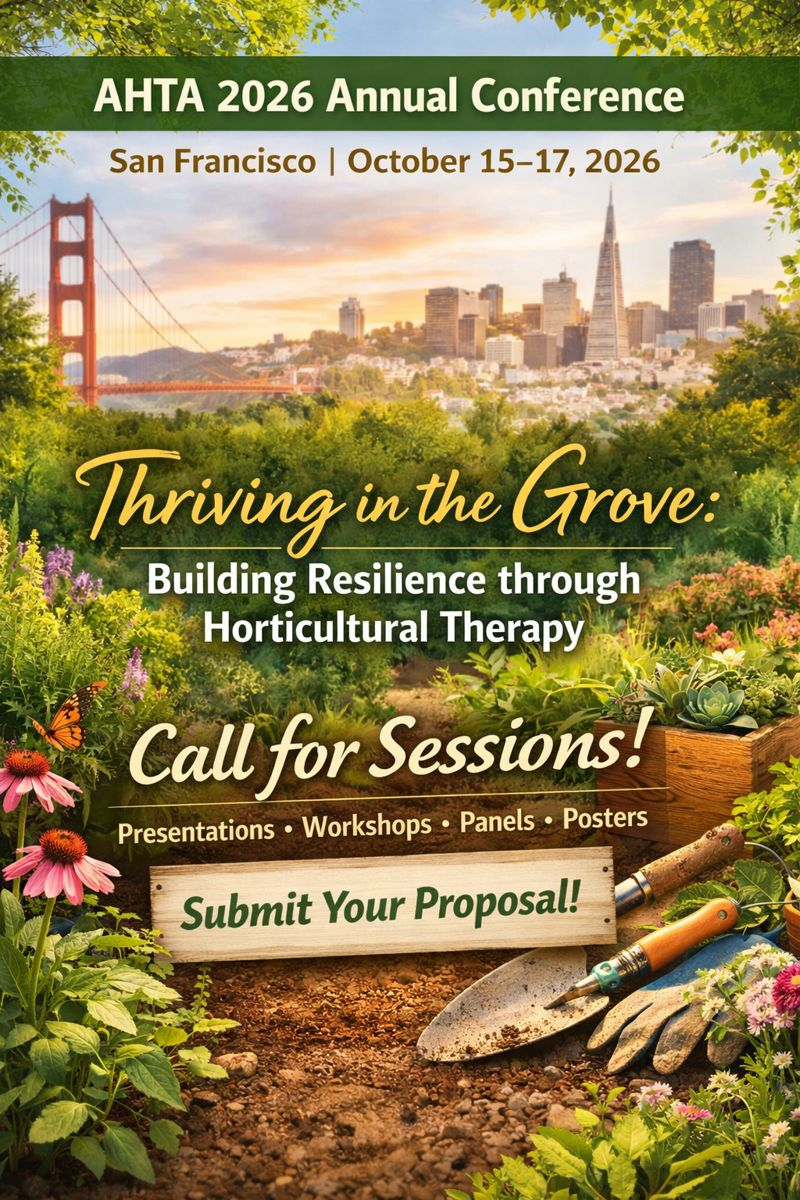
🌿 Call for Sessions Now Open!
AHTA 2026 Annual Conference | San Francisco | October 15–17, 2026
The American Horticultural Therapy Association (AHTA) is thrilled to announce that the Request for Proposals (RFP) is live for our 2026 in-person Annual Conference, taking place in beautiful San Francisco.
Our theme, Thriving in the Grove: Building Resilience through Horticultural Therapy, invites you to share the ideas, research, programs, and practices that are helping our field—and our communities—grow stronger.
We are seeking proposals for:
- Presentations
- Posters
- Hands-on workshops
- Panels and conversations
This conference is shaping up to be where it’s at—a gathering full of learning, inspiration, and connection. If you have something to say, something to share, or a story that can move our field forward, we want to hear from you.
Bring your voice. Share your work. Get your community excited.
Submit your proposal now and be part of an unforgettable conference experience.
🌿 Upcoming Webinar – Tuesday, February 24
Evidence-based research for HT -The National Initiative for Consumer Horticulture with Sheri Dorn
The National Initiative for Consumer Horticulture (NICH) is a consortium of professionals from green industry, public horticulture, and academia who actively collaborate to expand the field of consumer horticulture.
Join this webinar to learn more about NICH and its efforts to promote the many benefits of horticulture. Among its accomplishments include an award-winning publication series outlining the benefits of consumer horticulture to individuals and communities, press packs for use by professional garden communicators, multiple peer-reviewed articles encouraging the expansion and funding of consumer horticulture research. Most recently, the consortium led a national webinar series presenting the complex process of plant introduction to everyday gardeners.
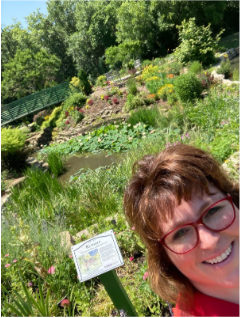
Dr. Sherri Dorn
Dr. Sheri Dorn is an Assistant Professor at University of Georgia’s (Athens) Department of Horticulture, specializing in Sociohorticulture and Horticultural Therapy. She is creating a horticultural therapy program for both undergraduate and graduate study. Her research centers on the relationship between people and plants, including therapeutic horticulture benefits for special populations, as well as the utilization of horticulture-based citizen science for social engagement. Using quantitative research methods such as surveys, Dr. Dorn seeks to measure the social, emotional, and educational impacts of gardening and plant-based activities. As a gardener, She is passionate about vegetable gardening and color in the garden! She enjoys raising vegetables with her family and planting colorful container gardens with annual and perennial combinations. Her latest interests include botanical crafts like flower-pressing and herbal products. Sheri believes there is always something to learn about plants and tries to visit public gardens whenever possible.
🌿 Upcoming Webinar – Tuesday, March 31
Share the Magic- Publishing in the Journal of Therapeutic Horticulture with Matthew J. Wichrowski
Publishing in a journal can seem to be an intimidating process, but taking the effort brings a range of benefits including lessons learned during the process, contributing to the field of HT/TH, and building one’s CV. Join us as we explore the process of publishing in AHTA’s Journal of Therapeutic Horticulture (JTH). The Journal has recently gone to an open access model which greatly increases visibility and allows access to the journal content for all. While JTH publishes research, there are additional sections which allow authors to share information and knowledge in a scholarly fashion to further advance our field. So, if you have interest in publishing in JTH, this webinar will provide a roadmap to help you along the way.
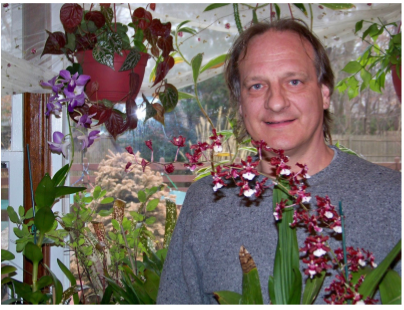
Matthew J. Wichrowski MSW, HTR
SR. Horticultural Therapist
Clinical Associate Professor
Rusk Rehabilitation
N.Y.U. Langone Hospital Center
An internationally recognized leader in horticultural therapy, Matthew serves as Editor-in-Chief of the Journal of Therapeutic Horticulture and Co-Chair of the Nature-Based Rehabilitation Task Force of the American Congress of Rehabilitation Medicine. His research examines how nature-based settings and activities impact health and well-being, with published work in cardiopulmonary rehabilitation, pediatric cancer care, dementia, and biophilic healthcare design. Matthew develops nature-based wellness programs, authors scholarly articles and textbook chapters, presents internationally, and has received numerous awards for advancing horticultural therapy in medical settings.
🌿 Webinar – Tuesday, April 28th
Credentialing the Profession of Horticultural Therapy" HT-BC Exam with Lana Dreyfuss
This webinar will define certification and why it matters. We will explore AHTAs history with certification and find out where we are today with the launching of the HT-BC. Q&A to follow!

Lana Dreyfuss LPCC, SEP, HTR
AHTA Secretary
Lana is a licensed professional clinical counselor, licensed clinical alcohol and drug counselor, somatic experiencing practitioner, and horticultural therapist registered. She/they holds a MA from the University of Maryland in counseling. Currently working at United Indian Health Services in northern California, living gratefully on Tolowa Dee-ni’ land and serving Native American community members providing behavioral health services to include the modality of horticultural therapy. Lana has been serving on the AHTA Board of Directors and work teams since 2004.
Webinar Work Team- Looking for Speakers
The webinar work team is looking for speakers for 2026. Please let Holly Harrison or Danielle Stojan know if you have any suggestions, recommendations or would like to teach one. The work team for 2026 includes, Mike Maddox with Danielle Stojan and Holly Harrison as co-leads. The webinar work team planning meetings are the 1st Tuesday of the month at 6pm Central Time. For 2026 webinars we are tentatively planning on March 31, April 28, May 26, September 29, October 27, & November 24.
🌱 Dive into the 2025 Membership Survey Results!
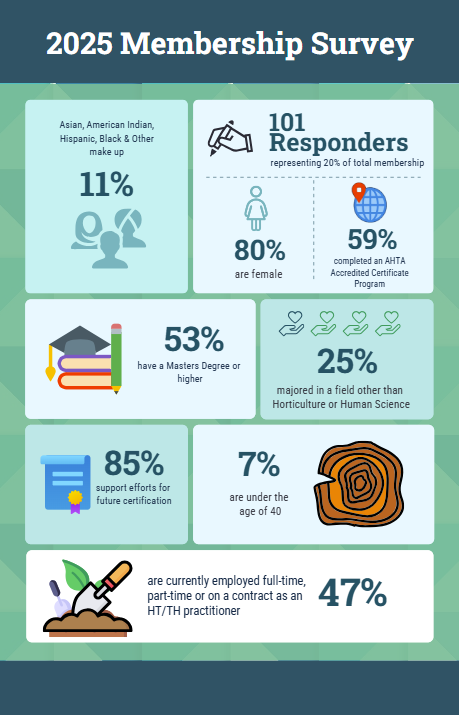
We encourage all members to check out the fascinating results from our 2025 Membership Survey! Your responses helped us paint a clear picture of our community. Did you know that 101 members (representing 20% of our total membership) responded, with 80% identifying as female? The survey also showed that a strong 53% of responders have a Master's degree or higher, and 59% have completed an AHTA Accredited Certificate Program. This data is vital for guiding our future initiatives, especially since 85% of you support efforts for future certification. Take a look at the full infographic to better understand the demographics and expertise shaping the future of Horticultural Therapy!
Experience Richard Louv’s Powerful 2025 Keynote Again
Watch Richard Louv’s 2025 Keynote Before January Ends
This is a friendly reminder that
Richard Louv’s keynote,
“The New Nature Movement,” from the 2025 AHTA Annual Conference—along with every conference presentation—is available for
free viewing through the end of January.
If you attended the 2025 conference, now is the perfect time to revisit Richard Louv’s powerful message about reconnecting people with the natural world and the essential role horticultural therapy plays in that work. You can also catch up on any sessions you missed or rewatch your favorites.
🔐 Exclusive Access for 2025 Attendees
These recordings are available exclusively to our 2025 conference attendees. To ensure you can access this content easily, we will be sending a separate email today that includes the direct link and the required password to unlock the library.
How to Watch:
Once you have your password, simply follow these steps:
- Click the link provided in our upcoming follow-up email.
- Enter the password included in that email to gain access.
Access ends January 31, so be sure to enjoy this benefit while it lasts.
Get inspired for the upcoming in-person conference in October 2026! 🌿

🌿 Countdown to the HT–BC Certification Exam
Cultivating the future of horticultural therapy — together
The countdown to the certification exam for the Horticultural Therapist–Board Certified (HT–BC) credential continues. The American Horticultural Therapy Association (AHTA) is pleased to have announced the launch of its first professional credentialing exam, scheduled to take place 9 months from now — in October 2026.
While some details are still being finalized, we want to keep our community informed and share what you can expect as this important credentialing process takes shape.
🍃 What is the AHTA Certification?
The AHTA Certification is a formal recognition that an individual has met established professional standards in horticultural therapy. It assures employers, clients, and the public that certified professionals possess the knowledge, skills, and experience necessary to practice effectively and ethically.
The certification process includes: - Defined education requirements - Verified professional experience - Successful completion of a comprehensive examination
Certification vs Certificate
- A certificate is awarded upon completion of an educational program (e.g., AHTA-accredited horticultural therapy courses) - Certification is a formal, third-party evaluation process that includes eligibility requirements, testing, and ethical standards.
✅ A certificate does
not equate to professional certification
🌱 Exam Content: Core Domains
The HT–BC examination is based on six key professional domains identified through the large-scale 2022 Job Task Analysis:
- Horticulture
- Treatment Planning
- Program Planning & Activity Design
- Managing Human Resources
- Business Practices, Safety & Ethics
- Professionalism & Scholarship
These domains reflect the essential knowledge areas for effective horticultural therapy practice.
🌼 Who is this Certification For?
The Horticultural Therapist–Board Certified (HT–BC) credential is designed for individuals seeking formal recognition as professional horticultural therapists.
It is expected that the HT–BC will eventually replace the current HTR designation as the primary credential in the field.
🌳 Why Certification Matters
Certification supports both individual professionals and the field as a whole:
- Professional Credibility – Verifies expertise and ethical practice
- Standardized Practice – Aligns professionals with best-practice guidelines
- Demonstrated Competence – Combines education, skill development, and experience
- Stronger Recognition – Builds public awareness and professional identity
- Ongoing Growth – Requires continued learning and engagement
Together, certification strengthens the roots of horticultural therapy for future generations.
🌷 Frequently Asked Questions
What will happen to the HTR designation? AHTA will stop accepting new HTR applications approximately three months before the HT–BC exam launch (anticipated July 1, 2026). Current HTRs and HTMs may continue using their designations. The HT–BC credential is optional for existing professionals, but will be required for new applicants after that point.
Will this affect the THP designation? No. The Therapeutic Horticulture Practitioner (THP) designation will remain unchanged.
How do I know if I’m eligible to sit for the certification exam? Eligibility will include education and experience criteria similar to HTR requirements, with an additional pathway for those in allied professions. These pathways align with national standards for professional certification.
Will there be study materials or prep courses for the exam? AHTA intends to provide recommended resources, sample questions, and guidance. The exam will be based on what qualified practitioners are expected to know through training and experience.
How long is the certification valid?
The HT–BC is expected to be valid for
five years. Renewal will include
continuing education and/or ongoing professional activity.
🍂 Stay Connected
More information regarding: - Eligibility requirements - The exam handbook - Continuing education expectations - Application timelines
…will be announced later this year. We encourage members to regularly visit the AHTA website for updates. https://www.ahta.org/certification
Thank you for being a vital part of the growing field of horticultural therapy.
Growing Awareness Through Collaboration & Sponsorship

Partnership supports growth.
At AHTA, collaboration across disciplines is essential to growing not only our profession—but public understanding of it. Our professional work, rooted in the powerful people–plant connection, has the capacity to positively change lives in healthcare, education, vocational, and wellness settings across the country and around the world. While its impact is clear to those who experience it firsthand, for many in the general public this work remains unfamiliar.
Partnership helps us change that.
Through strategic collaborations, AHTA is increasing public awareness—sharing stories, evidence, and real-world impact that highlight how this unique professional field supports mental health, resilience, physical mending and rehabilitation, and overall well-being. Sponsorship allows us to extend this message even further, amplifying it across healthcare systems, wellness spaces, community organizations, educational systems, and allied professions.
In the upcoming weeks, AHTA will be sharing new sponsorship guides and engaging with organizations that share our commitment to collaboration, innovation, and meaningful impact. These partnerships play a vital role in expanding awareness, supporting the continued advancement of professional standards through board certification, and ensuring more people benefit from the healing power of plants.
Watch for our upcoming sponsorship opportunities and join us in expanding the visibility of our professional field.
Interested in collaborating to help grow awareness of horticultural therapy and therapeutic horticulture? We would love to start the conversation. Reach out to us at sponsorship@ahta.org.
AHTA Membership Meeting Notification
AHTA has been working on changes for the membership categories. Those changes were approved by the Board of Directors in the December 2025 board meeting.
Membership categories are part of the AHTA Bylaws, so we are calling a special membership meeting on Monday March 2nd, 2026, at 4:00 pm Pacific, 7:00 pm Eastern.
During this meeting, we will:
- Explain the proposed changes
- Answer questions you have about those changes
- Vote on the proposed motion to make the changes
If you are a voting member of AHTA you will receive an email with the proposed changes to the categories and Bylaws ahead of this meeting.
Keep an eye out for that email and please stay tuned for more information!
Forget Me Not Flowers, Dementia & Seed Pots
By Lesley Fleming, HTR & Beth House, BRec
From Nova Scotia Horticulture for Health Network.
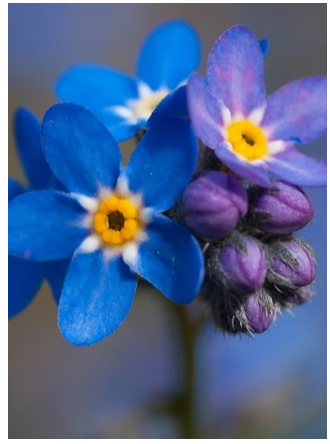
ACTIVITY DESCRIPTION: Participants will make biodegradable seed pots for planting Forget Me Not seeds, these associated with Alzheimer’s disease & dementia.
The facilitator begins session by sharing the connection between Forget Me Not flowers & dementia/Alzheimer’s. Several methods of creating seed pots for these or other seeds are presented & selected based on participant needs, goals and attention skills. Seed pots can be made from toilet paper or paper towel tubes, cardboard egg cartons &/or newspaper; each method is described in the THAD. The activity can include sustainable gardening practices. Materials: toilet rolls, scissors, potting soil, seeds, water, cardboard egg cartons, newspaper, jar or other form for creating shape. Alzheimer’s societies may donate seeds.
Making biodegradable seed pots is appropriate for most populations and can be modified to accommodate people living with dementia, memory loss or other health challenges. For people living with dementia, and depending on their abilities, propensity for putting items in their mouths or using scissors, parts of the activity can be undertaken excluding soil, seeds or scissors if these may cause safety concerns. Making the seed pots can be good physical activity for strengthening fingers, hand movements and hand-eye coordination. Making seed pots can also contribute to sense of accomplishment and contribute to a group service project where others plant the seeds and grow the Forget Me Nots in the seed pots. Additional therapeutic goals are identified in the THAD.
Tips for Practice
The use of plants, essential for TH sessions, can be integrated into this activity where information about the flower as a symbol of Alzheimer’s societies can expand participants’ understanding of people-plant connections. “The tiny blue five petalled flowers with yellow centers, known as Forget Me Nots, have become symbols of Alzheimer’s disease awareness across the globe. It is Myosotis spp. that is featured on pins, badges and educational materials. Forget Me Not flowers, from the Boraginaceae family of plants, in the Myosotis genus consists of 153 species” (Fleming & House, 2025; Lee, 2024). Making biodegradable seed pots, then planting Forget Me Not seeds can reinforce multi-domain goals in physical, cognitive, psychological and sensory areas.
Lesley Fleming, HTR leads the Nova Scotia and the Florida Horticulture for Health Networks. Her recent work has included leading the collaborative THAD project, FLHHN’s Resource Hub, and 2024 Journal of Therapeutic Horticulture articles on TH Goals co-authored with Elizabeth Diehl and Kathryn Grimes and Positive Impacts from COVID-19 on Gardening and HT.
Beth House, BRec is the Education Coordinator of the Alzheimer Society of Nova Scotia. With a therapeutic recreation background specializing in geriatric populations, Beth spent 20 years working in long term care, enhancing quality of life for the residents she served.
AHTA Website Update Notification
AHTA wants to extend our sincerest apologies for the unexpected delays in completing the updated website. During the integration we encountered unforeseen technical complexities that required extensive work to ensure the website’s functioning. Currently we are working diligently to update the pages with current information and ease of access. We anticipate the website will be completed by the end of January. Thank you all for your incredible patience and understanding as we work to bring you the improved experience you deserve!
Updates from AHTA
- The AHTA Code of Ethics was updated to align with professional standards effective March 1, 2025! For more information Here
- The THP Verification of Work Experience form has been updated expanding the direct client services to include direct client hours, documentation, program planning/preparation, client meetings, supervision meetings and non-supervision meetings!
- The HTR Verification of Work Experience has been updated to requiring the equivalent of 1,500 hours work experience as an employee or independent contractor, supervised by either a HTR or general supervisor who can validate the horticultural therapy services provided.
HTR Internship Sites and Intern Supervisors Information Updates
AHTA receives numerous requests for information from students in Horticultural Therapy educational programs and applicants for the Horticultural Therapist – Registered regarding the internship requirements for registration. A list of internship sites that meet the requirements for HTR internships, as well as the list of approved Intern Supervisors, are available on the AHTA website. We ask for your help to update those lists.
If you are part of a program that is currently on the list of Intern Sites, AHTA members please check your program and contact information on the AHTA website Internship Sites. If you need to make updates, contact the AHTA office at info@ahta.org .
If you know of a program that is already hosting HTR interns and is not listed, or you are part of a program that would like to be listed as an internship site, please go to the Internship Site Questionnaire on the Horticultural Therapy Internship webpage, under the Professional Registration tab. If you have been a HTR for at least 1 year and would like to be listed on the website as an Intern Supervisor, please complete the application at Intern Supervisor Application.
If you have any questions, please contact the AHTA OFFICE.
AHTA Journal of Therapeutic Horticulture
The AHTA Journal of Therapeutic Horticulture had been approved for the OpenAccess Model and is now available on Google Scholar. Did you know that you can access the copies of the AHTA Journal of Therapeutic Horticulture by going to Google Scholar, putting in the “AHTA Journal of Therapeutic Horticulture” in the search window and to narrow down your search add the volume number from the AHTA list of Journal. Click HERE to learn more. While considering publishing in the AHTA Journal of Therapeutic Horticulture consider that as members of AHTA there is no charge for the Article Processing Charge (APC) while nonmembers pay $300. Another great way to become a member! Hoping to see more submissions that will go out to all!
AHTA HTR Database Search Option
AHTA HTR Database Search Option AHTA has a Horticultural Therapist Registered (HTR) Directory feature on our website. This feature allows companies or the general public to search for HTRs near them. The benefits for HTRs may include employment, consultation work, presentation /information sharing opportunities, advocacy for the profession of horticultural therapy and more!
Become a Member
Not a member of AHTA? Join today! AHTA's membership is comprised of Individuals who are passionate about the unique benefits of horticultural therapy as a therapeutic modality. Members are committed to the growth of the profession. Membership in the AHTA will keep you up to date on the latest in horticultural therapy news, as well as give you access to outstanding educational and networking opportunities.
Did you know? AHTA members benefits include free webinars and free article processing fees for the AHTA Journal of Therapeutic Horticulture! Another two new reasons to join!